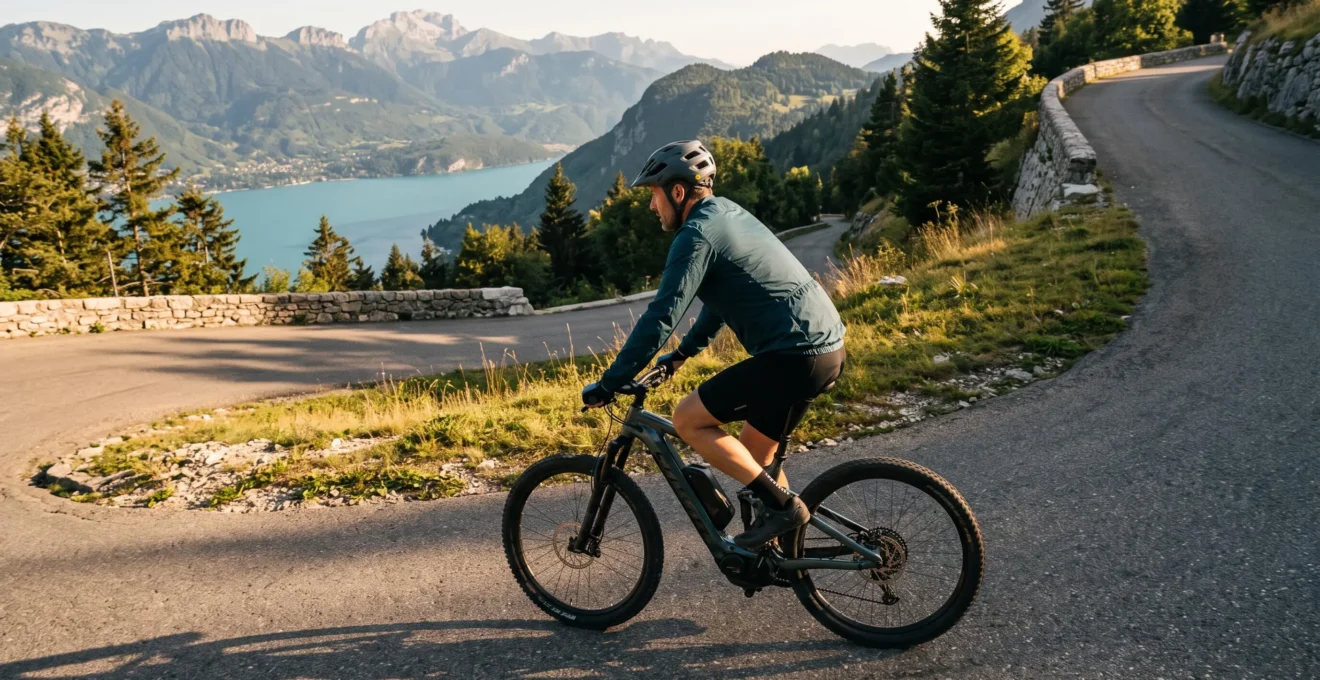
The lake gets all the attention. Flat bike paths, beach stops, the classic loop every family posts online. Yet the most memorable views around Annecy sit hundreds of meters higher, at the top of mountain passes like the Col de la Forclaz and the Semnoz. For an occasional cyclist, those climbs sound out of reach. They are not — provided you rent the right electric bike, pick the right assistance mode and manage your battery with a minimum of method.
This guide turns the three usual worries — elevation gain, battery range and rental cost — into concrete conditions for a successful day. It also walks you through a realistic “pass day” itinerary from Annecy, with village stops and a safe descent.
Direct answer: yes, you can climb Annecy’s mountain passes on a rental e-bike as an ordinary cyclist, on three conditions: a full-day rental formula, a battery-management plan for the ascent, and a honest acknowledgment that the electric assist makes the climb playable — not effortless.
Why Annecy’s mountain passes are within reach of an e-bike
The geography around Lake Annecy is straightforward: a flat lakeshore, and two emblematic climbs that rise from the valley to spectacular viewpoints. The Col de la Forclaz crowns the western shoulder above Talloires, famous for its paragliders and its panorama over the whole lake. The Semnoz plateau, south of Annecy, is a proper mountain climb — and the numbers are public.
According to the official profile of the Semnoz ascent published by Savoie Mont Blanc, the climb totals more than 17 km at nearly 7% average gradient, with several kilometers above 9%, and the loop route accumulates 1,250 m of positive elevation gain. That is a serious day on a regular bike. On a rental e-bike, it becomes a demanding but achievable outing for someone who cycles a few times a month — which is exactly the point.
One honest caveat before anything else: electric assistance does not cancel the mountain. It reduces the effort to a level you can sustain, but you still pedal, still climb, and still manage your energy. A renter who flips the bike to maximum assist and expects a flat ride will drain the battery far faster than expected. The pass is reachable; it is simply earned differently.
It also means going beyond the postcard image of the lakeside loop. The lake path is a great warm-up, but the passes are where the day becomes memorable. If you have never ridden an e-bike before, a short rental from a specialist such as electric bike rental in Annecy lets you test the machine on the flat before committing to a climb — a sensible first hour that de-risks the rest of the day.
How much battery range do you actually need for a climb?
Battery anxiety is the number one reason renters hesitate before booking a pass day. The realistic answer: range depends far more on your assistance mode than on the battery itself. A rental e-bike ridden in maximum assist on a mountain road can see its advertised range cut dramatically, while the same battery in a moderate mode stretches much further. Manufacturer range figures assume mixed, gentle usage — an alpine ascent is neither.
1250m
Positive elevation gain of the Semnoz loop (Savoie Mont Blanc data) — the kind of climb where assistance mode, rider weight and wind make the real difference on your battery reserve.
Three factors drain a battery fastest on a pass climb:
- Assistance level: the top mode feels effortless and consumes the most; the middle mode keeps the climb demanding but preserves range.
- Total weight: rider, gear and the bike itself all count on a sustained gradient.
- Wind and gradient: exposed sections above 9%, documented on the Semnoz, push consumption up sharply.
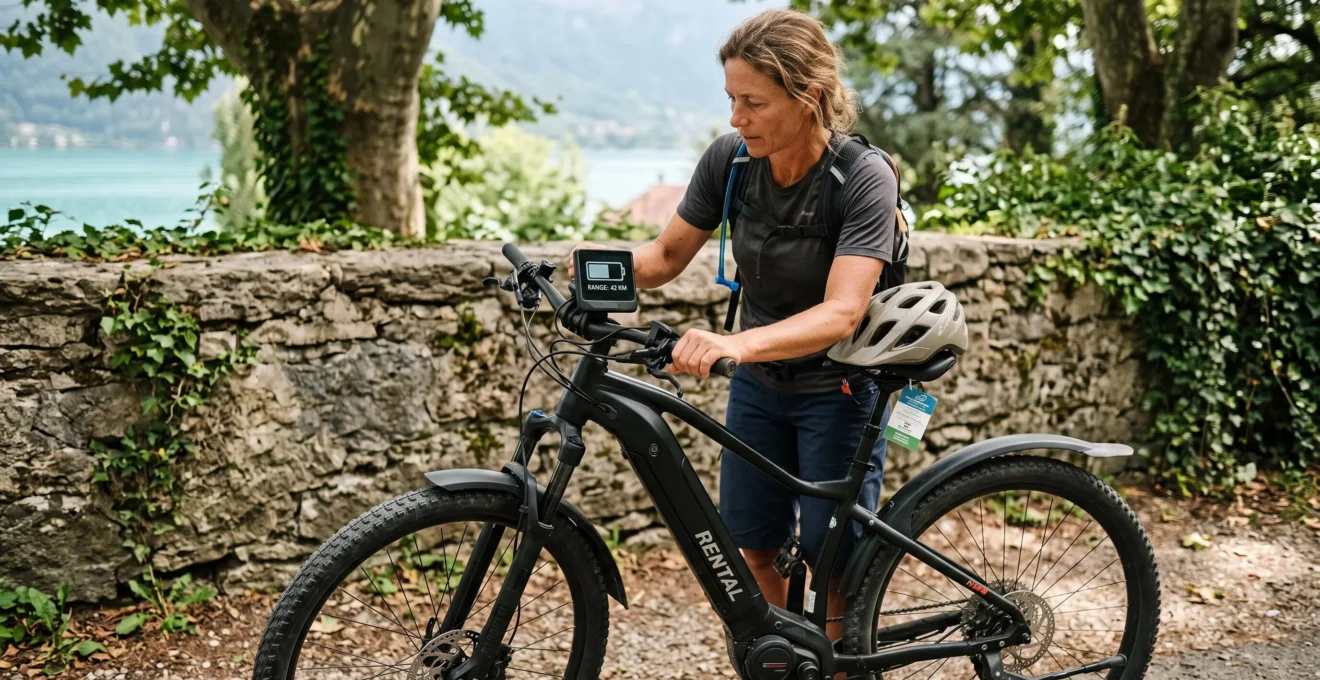
The working method is simple. Start the climb in a moderate assist mode and keep the top mode as a reserve for the steepest kilometers. Before turning back, check the display and keep a safety margin for the return leg — downhill, an e-bike barely consumes, but the approach roads and village detours do. If you want to go further on the same charge, a few riding habits genuinely help: extending your e-bike range without a new battery mostly comes down to cadence, tire pressure and anticipating stops rather than magic tricks.
The golden rule of range: plan your battery for the full loop, not just the climb. Keep a reserve for the return, switch to moderate assist on steady sections, and treat maximum assist as a tool for the steepest ramps — never the default.
As for physical level: a climb of several hundred meters of elevation gain in VAE remains a real effort, comparable to a brisk two-hour workout. If you exercise occasionally, you can do it. If you have not exercised in years, start with the lower slopes and turn around when the display says so — the Forclaz viewpoint rewards partial ascents too.
Choosing the right bike and rental formula for the mountains
Not every rental e-bike is built for a pass. What matters for a climb: a motor with good torque (a mid-drive unit handles sustained gradients better than an entry-level hub system — if you want to understand the technical difference, this comparison of choosing a motor system for a hilly commute applies directly to mountain riding), powerful brakes for the descent, and a comfortable upright position for a long day. Ask the rental shop which of their bikes they would take up the Forclaz; a specialist will have a clear answer.
Duration is the second decision. Rental formulas typically run from one hour to a full day, and for a pass outing the full day is the only realistic choice. A one-hour rental covers a lakeside test ride; the Forclaz itinerary with village stops, the climb, a lunch break and the return occupies a good part of your day. Here is how the two formulas compare for this specific project:
| Criteria | 1-hour formula | Full-day formula |
|---|---|---|
| Best suited for | Testing the e-bike, lakeside ride | Col de la Forclaz or Semnoz itinerary |
| Time for village stops | No | Yes — Talloires, Menthon-Saint-Bernard |
| Battery management pressure | None | Manageable with a reserve plan |
| Budget logic | Low cost, low ambition | Higher cost, covers the whole day |
The cost objection deserves an honest look. A full-day rental with an e-bike specialist like Mobilboard includes the equipment — helmet, lock and the bike itself — and booking through their web rates usually costs less than the on-site price. Set against a day of mountain views without a car, the value equation works for most vacation budgets; what you are really paying for is access to scenery unreachable on foot in a morning.
A sample day: climbing the Col de la Forclaz from Annecy
Nothing beats a concrete scenario. Here is a realistic “pass day” template, built around the Col de la Forclaz and the eastern shore of the lake. Adjust the timing to your fitness; the structure stays the same.
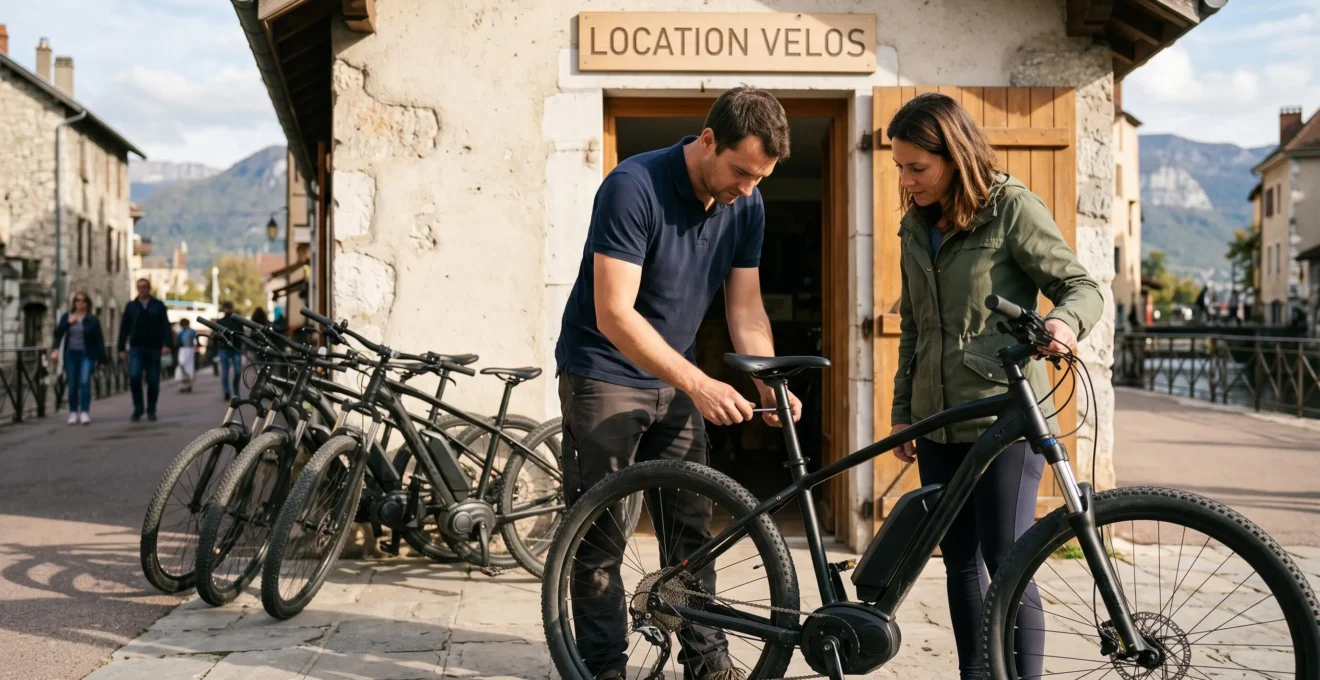
- Morning: pickup and setup in Annecy.Collect your e-bike, check the battery is fully charged, and have the seat height and brakes adjusted. Ten minutes here saves discomfort for the whole day.
- Ride along the lake to Talloires.Warm up on the flat eastern shore. Stop in Talloires for a coffee and a first battery check before the real climb begins.
- The ascent to the Col de la Forclaz.Switch to moderate assist and settle into a steady rhythm. Save maximum assist for the steepest ramps. Pause when you need to — this is a vacation, not a race.
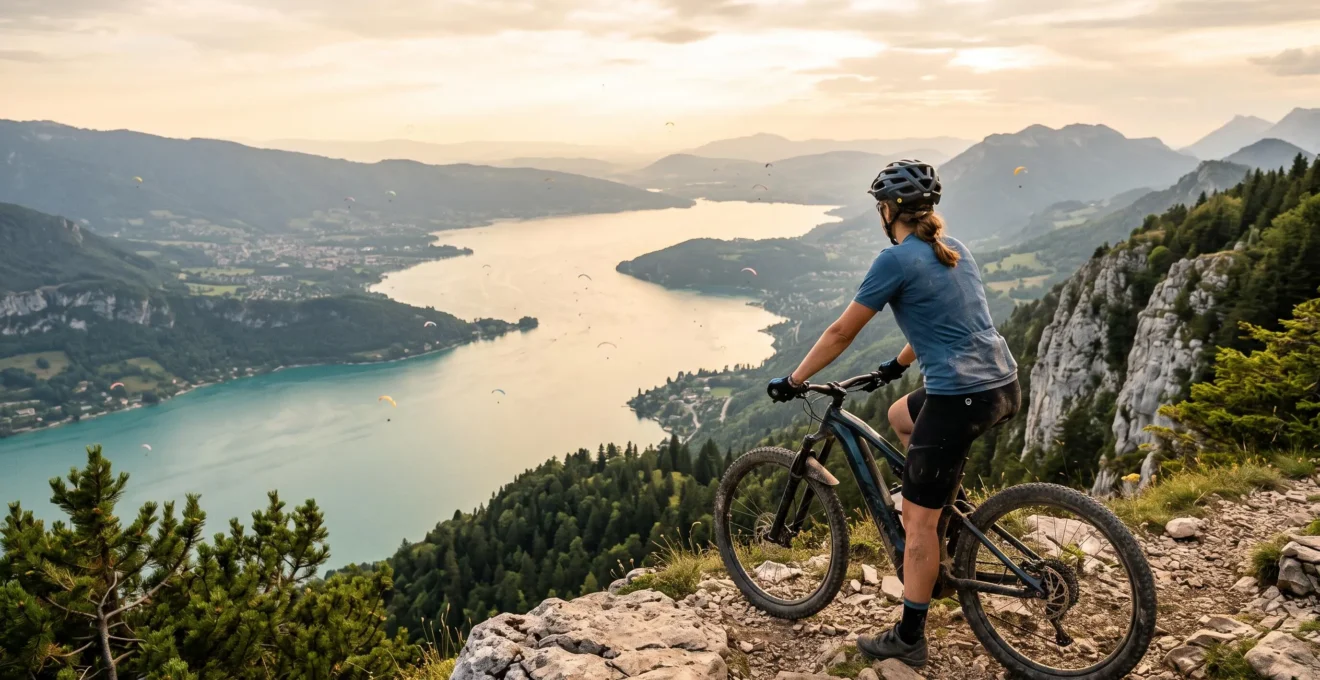
- Summit break and viewpoint.Watch the paragliders launch and take in the full lake panorama. Eat, drink, and let the battery rest while you do.
- Careful descent.Descend with progressive braking, both brakes together, at a speed that leaves you reaction time. The e-bike carries momentum — respect it.
- Lunch stop in Menthon-Saint-Bernard.Drop down to the lakeside village for lunch by the water, castle above, feet nearly in the lake.
- Return to Annecy with a battery eye.Ride the last stretch in a low assist mode, monitoring the display. If the reserve runs low, reduce assistance before you panic — the flat lakeshore is rideable unassisted.
As for total duration, count a full day: several hours of riding plus breaks. No official source publishes an exact e-bike timing for this route, so treat any precise figure you read elsewhere with caution — build your day around the structure above and listen to your own pace instead.
Getting the most out of your ride: preparation and safety
Mountain roads demand more attention than a bike path, but the rules are simple and well established. The safety recommendations of the Fédération française de cyclotourisme boil down to adapted equipment, respect for the road code, visibility and anticipating hazards. On a pass descent, that translates into one habit: brake progressively and evenly, front and rear together, before the corner — never hard inside it.
For a beginner wondering which pass to target first, the Col de la Forclaz is the natural entry point: shorter than the Semnoz, rewarded with the lake’s most photographed panorama, and forgiving if you turn around early. The Semnoz, with its documented 17 km and sections above 9%, is the step up for a second outing once your battery management instincts are in place.
- Battery charged to 100% and firmly locked in place.
- Helmet fitted, brakes tested over a few meters.
- Weather checked — mountain weather changes fast, and wet pavement changes everything on a descent.
- Route and turnaround point agreed, with your battery reserve in mind.
- Rental formula covering the full day, equipment included confirmed.
- Yes, the Forclaz and the Semnoz are rideable on a rental e-bike, if you manage your battery.
- Full-day formula only — one hour covers a lakeside test, not a pass.
- Moderate assist for the climb, maximum assist as a reserve, safety margin for the return.
- Forclaz first for beginners; Semnoz as the ambitious second climb.
- Descent: progressive braking, visibility, and respect for the road code.
If the plan above matches the day you had in mind, the next step is practical: book the full-day formula, confirm what equipment is included, and ask the team at Mobilboard which of their bikes they would personally take up the Forclaz. A ten-minute conversation at the shop will answer in minutes what no article can — and then the mountain is yours, one pedal stroke at a time.