Environment and green mobility
The global shift toward sustainable transportation has positioned cycling at the forefront of environmental solutions. As cities grapple with air pollution, traffic congestion, and carbon emissions, bicycles offer a compelling alternative that addresses multiple ecological challenges simultaneously. Unlike motorized transport, cycling produces zero direct emissions while providing tangible health benefits, making it a cornerstone of modern green mobility strategies.
Understanding the environmental dimensions of cycling extends beyond simple emission comparisons. It encompasses urban infrastructure development, technological innovation in electric-assist bikes, behavioral change dynamics, and the integration of cycling into broader sustainable transport networks. This comprehensive exploration examines how cycling contributes to environmental preservation, what barriers prevent wider adoption, and how communities can leverage two-wheeled transport to create healthier, more sustainable cities.
Why Cycling Matters for Environmental Sustainability
The environmental case for cycling rests on multiple interconnected factors that together create a powerful argument for bicycle-based mobility. At its core, cycling represents one of the most resource-efficient forms of human transportation ever devised.
Carbon Footprint and Emissions Reduction
Every kilometer cycled instead of driven eliminates approximately 271 grams of CO2 emissions from the atmosphere. For urban commuters traveling 10 kilometers daily, switching from car to bicycle prevents roughly 700 kilograms of carbon dioxide annually—equivalent to the absorption capacity of 35 trees. These figures become transformative at scale: if just 10% of urban car trips shifted to bicycles, cities could reduce transport emissions by 6-14% depending on local conditions.
Beyond carbon dioxide, cycling eliminates the release of nitrogen oxides, particulate matter, and volatile organic compounds that plague urban air quality. Cities with high cycling rates, such as Copenhagen and Amsterdam, consistently record lower respiratory disease rates and better overall air quality metrics than car-dependent metropolitan areas of similar size.
Resource Efficiency Compared to Motor Vehicles
The manufacturing and operational resource requirements of bicycles pale in comparison to automobiles. Consider these contrasts:
- A standard bicycle requires approximately 15-20 kilograms of materials to manufacture, compared to 1,200-1,500 kilograms for a typical car
- Bicycle production consumes roughly 5% of the energy needed to manufacture a motor vehicle
- No fuel extraction, refining, or distribution infrastructure is necessary for human-powered cycling
- Road wear from bicycles is negligible, reducing infrastructure maintenance demands and the associated environmental costs of road repair
The energy efficiency metric is equally striking: cycling converts approximately 90% of pedaling energy into forward motion, making it more efficient than virtually any other transport mode including walking. This thermodynamic efficiency translates directly into minimal environmental impact per kilometer traveled.
Urban Planning and Cycling Infrastructure
Creating cities where cycling becomes the natural choice rather than a courageous act requires intentional infrastructure development. The quality and extent of cycling facilities directly determine adoption rates and safety outcomes.
Bike Lanes and Dedicated Cycling Networks
Physical separation between cyclists and motor traffic proves critical for both safety and ridership growth. Protected bike lanes—with physical barriers rather than just painted lines—increase cycling rates by 75-200% compared to shared roadways. These protected corridors address the primary barrier preventing casual cyclists: fear of vehicle conflicts.
Comprehensive cycling networks that connect residential areas, employment centers, schools, and commercial districts create the utility that transforms cycling from recreation to practical transportation. Successful networks share common characteristics:
- Continuous routes without gaps that force cyclists onto dangerous roads
- Intersection designs that prioritize cyclist visibility and provide dedicated signal phases
- Traffic calming measures in residential areas that reduce vehicle speeds to safe coexistence levels
- Secure bicycle parking at destinations, eliminating theft concerns
Integration with Public Transport
The “last mile problem”—how people travel from transit stations to final destinations—finds an elegant solution in bicycle integration. Cities that permit bikes on trains and buses, provide secure parking at transit hubs, and design stations with easy bicycle access create multimodal green mobility systems that eliminate car dependency even for longer trips.
Bike-sharing systems positioned at transit stations extend the effective radius of public transport networks from 500 meters (comfortable walking distance) to 2-3 kilometers, dramatically increasing the population served by each station. This integration multiplies the environmental benefits of both systems while improving user convenience.
Electric Bikes and Green Technology Innovation
Electric-assist bicycles represent a technological bridge between conventional cycling and motorized transport, expanding cycling’s potential demographic and geographic range. By reducing the physical effort required to travel longer distances or navigate hilly terrain, e-bikes make cycling accessible to older adults, people with moderate physical limitations, and those facing challenging topographies.
The environmental calculus remains compelling: e-bikes consume approximately 1-2 watt-hours per kilometer, roughly 1% of the energy required by electric cars. Even accounting for battery production and electricity generation emissions, e-bikes produce 90-95% fewer lifecycle emissions than automobiles. Battery technology improvements continue to enhance this advantage, with modern lithium-ion batteries lasting 1,000+ charge cycles and recyclability rates exceeding 90%.
E-bikes particularly excel at replacing car trips rather than conventional bicycle trips. Research indicates that e-bike owners substitute car trips for 30-50% of their journeys, while only 10-20% of e-bike trips replace conventional cycling. This pattern suggests e-bikes expand the environmental benefits of cycling rather than cannibalizing existing sustainable behavior. Cargo e-bikes further extend this potential, enabling families to replace car trips for shopping, school runs, and errands that would be impractical on conventional bicycles.
Health and Environmental Benefits Combined
Cycling’s unique value proposition lies in generating positive health outcomes while simultaneously reducing environmental harm—a rare win-win scenario where individual and collective benefits align perfectly.
Regular cyclists reduce their risk of cardiovascular disease by 30-50%, type 2 diabetes by 20-30%, and all-cause mortality by approximately 40% compared to sedentary individuals. These health improvements generate economic value through reduced healthcare costs that far exceed the infrastructure investment required to support cycling. One analysis found that every dollar invested in cycling infrastructure returns $3-4 in health benefits alone, before accounting for environmental advantages.
The air quality improvements generated by reduced vehicle traffic create a positive feedback loop: cleaner air improves respiratory health for all residents, including non-cyclists. Cities that have successfully increased cycling mode share report measurable decreases in asthma rates, particularly among children. This collective benefit extends the health advantages beyond individual cyclists to entire communities.
Mental health benefits add another dimension. Regular physical activity reduces anxiety and depression, while outdoor exposure provides psychological restoration. The slower pace of cycling compared to driving enhances neighborhood connection and community cohesion, social factors that influence wellbeing beyond pure physical health metrics.
Overcoming Barriers to Green Mobility Adoption
Despite compelling environmental and health arguments, cycling remains a minority transport mode in most cities. Understanding and addressing adoption barriers proves essential for realizing cycling’s green mobility potential.
Safety concerns dominate barrier research. Perceived danger from vehicle traffic prevents 60-70% of interested potential cyclists from actually riding, even when objective crash statistics suggest relatively low risks. This perception-reality gap requires infrastructure solutions that provide both actual safety and the subjective feeling of protection. Protected bike lanes address both dimensions simultaneously.
Weather concerns present another commonly cited barrier, though evidence suggests weather impacts are smaller than perceived. Cities with established cycling cultures maintain 70-80% of ridership during winter months, demonstrating that appropriate clothing and infrastructure (cleared bike paths) enable year-round cycling. The key lies in gradual behavior change: as more people cycle, weather becomes normalized rather than exceptional.
Cultural and social norms significantly influence cycling adoption. In car-oriented cultures, cycling may carry stigmas of poverty or childishness that deter adults. Changing these perceptions requires visible normalization: when colleagues, neighbors, and community leaders cycle, social permission expands. Professional dress while cycling, cargo bikes transporting children, and diverse demographic representation all challenge limiting stereotypes.
Practical considerations like trip distance, cargo carrying capacity, and arrival freshness have technical solutions. E-bikes address range and topography challenges, cargo bikes handle substantial loads, and workplace facilities (showers, lockers, bike parking) eliminate arrival concerns. Cities serious about green mobility provide policy and infrastructure support for these solutions rather than expecting individual cyclists to overcome barriers independently.
The transition to cycling-centered green mobility represents more than infrastructure investment—it requires reimagining urban space priorities, challenging automobile-centric assumptions, and recognizing that sustainable transportation delivers benefits far exceeding simple emission reductions. As climate urgency intensifies and urban air quality concerns mount, cycling offers an immediately deployable, scalable solution that improves individual health while addressing collective environmental challenges. The question facing cities is not whether cycling should play a central role in green mobility, but how quickly they can create conditions where cycling becomes the obvious choice for millions of daily trips currently made by car.
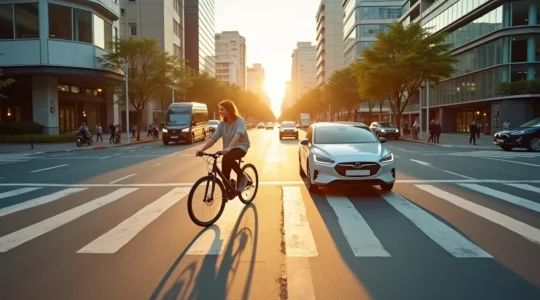
E-Bike vs Electric Car: Which Is the True Champion of Low Emissions?
An electric car’s “zero tailpipe emissions” claim hides a cascade of environmental costs related to its mass, making an e-bike exponentially cleaner across its entire lifecycle. Heavy EVs produce significant “second-order” pollution, such as toxic tire microplastics, which lightweight e-bikes…
Read more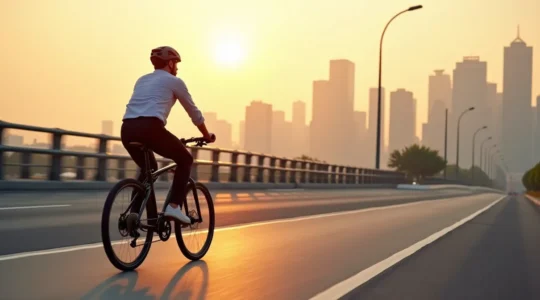
The 2-Ton Diet: How Replacing Short Car Trips Cuts Your Annual Emissions by 1 Ton?
Replacing short car trips with an e-bike isn’t just a minor improvement; it’s a mathematical lever that can cut your personal annual carbon footprint by over a ton. A car’s engine is disproportionately polluting on short trips before its catalytic…
Read more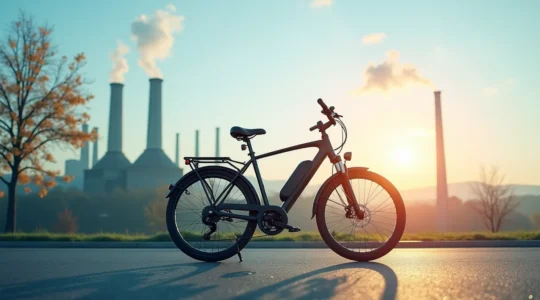
Manufacturing Impact: How Long Must You Ride to Offset Your E-Bike’s Carbon Debt?
The true carbon cost of an e-bike is not a one-time manufacturing price; it’s a lifecycle “mortgage” that you manage through daily ownership choices. Manufacturing accounts for the vast majority of an e-bike’s emissions, making longevity the single most critical…
Read more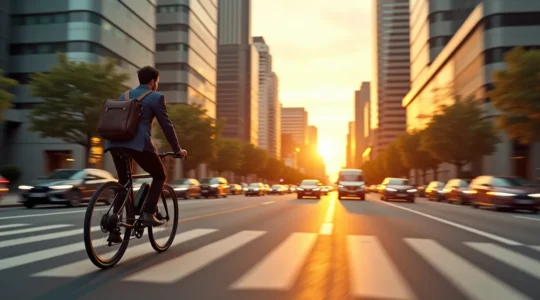
How Switching to E-Mobility Can Save You Over $2,000 Annually in the City
Choosing an e-bike over a car for city commuting is a strategic financial decision that transforms a depreciating liability into a high-return asset. The total cost of ownership for a car used for short trips is disproportionately high due to…
Read more