
E-bikes transform family time from passive screen-gazing into active, shared adventures that strengthen relationships across generations.
- They eliminate fitness gaps, allowing everyone from grandparents to teens to ride at a conversational “chat pace.”
- Replacing just one hour of screen time with a ride boosts energy levels, reduces stress, and improves sleep quality.
Recommendation: Start with a short, fun destination like a local bakery or park to build a sustainable habit of connection.
Imagine the familiar weekend scene: the family is technically “together” in the living room, but each member is lost in their own digital world—a phone, a tablet, the television. This shared space paradoxically highlights a sense of disconnection. Many families search for activities that everyone can genuinely enjoy together, but vast differences in age, fitness, and interests often lead back to the lowest common denominator: passive entertainment like watching a movie. While enjoyable, these activities rarely foster the deep, interactive bonding that families crave.
The common solutions often involve compromise, where one person’s high-energy preference is watered down, or another’s need for a slower pace feels like a burden. But what if the solution wasn’t about compromise, but about elevation? What if a single tool could erase physical disparities and create a new platform for shared experiences? This is the quiet revolution of the electric bike. It’s not just a bicycle with a motor; it’s a social catalyst that re-engineers family dynamics, turning parallel screen time into kinetic conversations and creating lasting memories, one pedal stroke at a time.
This guide explores how e-bikes serve as the ultimate bridge between generations. We’ll delve into the technology that makes it possible, the social science that explains why it works, the practical steps to replace digital habits with outdoor adventures, and the critical safety measures to ensure every ride is a happy one. Prepare to see your family weekends in a whole new light.
Summary: Reclaiming the Weekend: How E-Bikes Enable Multi-Generational Family Rides?
- Why E-Bikes Allow Grandparents to Keep Up with Teenagers?
- How “Chat Pace” Riding Improves Social Bonds Compared to Movies?
- Digital Detox: Replacing Saturday Morning TV with a Bakery Ride
- The Mistake of Thinking Exercise Drains Energy Instead of Boosting It
- When to Ride for Better Sleep: Morning vs Evening Impact?
- The Mistake of Letting Underage Kids Ride Class 3 E-Bikes
- Why the “E-Bike Smile” Reduces Work Stress Levels by 30%?
- From Occasional to Daily: How to Build a Cycling Habit That Sticks for 21 Days?
Why E-Bikes Allow Grandparents to Keep Up with Teenagers?
The magic that lets a grandparent effortlessly cruise alongside an energetic teenager isn’t just about a motor; it’s about intelligent technology. The key is the difference between a basic cadence sensor and a sophisticated torque sensor. While a cadence sensor simply turns the motor on when you pedal, a torque sensor measures *how hard* you’re pedaling and provides a proportional boost. This creates a seamless, intuitive experience that feels like you’ve suddenly been gifted with superhuman legs. It amplifies your effort rather than replacing it.
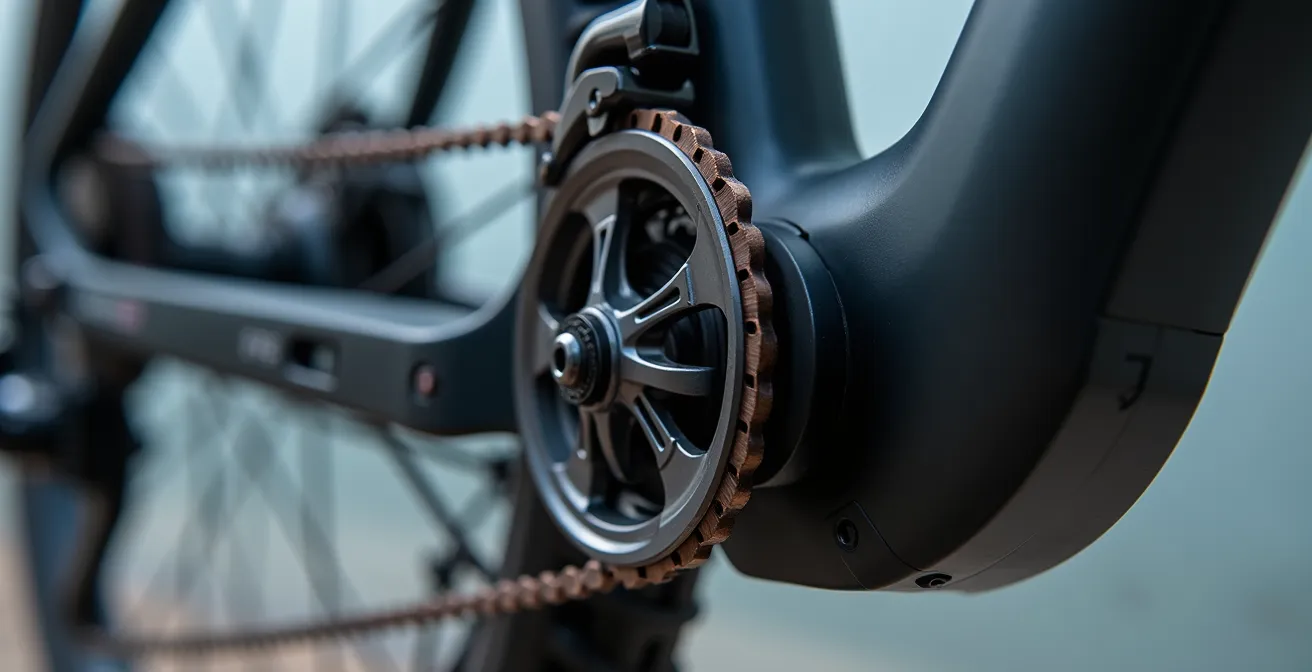
As the illustration above highlights, this system is a complex piece of engineering designed for a simple purpose: to create experience equity. A grandparent can set their assist level higher to conquer a hill with the same perceived effort as a grandchild using a lower setting. This eliminates the “I’m holding everyone back” anxiety and the “I’m waiting for everyone” frustration. It’s this technological harmony that transforms a potentially strenuous activity into a joyful, shared one. In fact, research confirms the impact, with one survey finding that more than 80% of respondents agree e-bikes make family bicycling more accessible for everyone involved.
How “Chat Pace” Riding Improves Social Bonds Compared to Movies?
Watching a movie as a family creates a shared focal point, but it’s an inherently passive and non-interactive experience. The story happens *on the screen*, and conversation is actively discouraged. E-biking, by contrast, creates a unique social environment defined by what we can call “chat pace.” Because e-bikes equalize the effort needed to maintain a comfortable speed, the entire family can ride at a pace that allows for easy, continuous conversation. The focus shifts from physical struggle to shared observation and interaction.
This “kinetic conversation” is fundamentally different from a static, face-to-face talk, which can sometimes feel confrontational or forced. Gentle, parallel motion often helps people open up, making discussions feel more natural and less intense. You’re not just watching a story; you’re creating your own, together, in real-time. This is precisely why many are drawn to the activity; research from Portland State University shows that 11% of e-bike buyers purchased one specifically to ride with friends or family they otherwise couldn’t keep up with.
E-biking provides opportunities to connect with others through group rides, community events, and family outings, with social interaction being a key component of mental health.
– Tamobyke Research Team, E-Bike Health Benefits Guide 2025
Instead of merely consuming a narrative, you’re building one. You’re pointing out a bird, deciding on a spontaneous detour to the ice cream shop, or simply enjoying a comfortable silence side-by-side. This active participation in a shared journey forges much stronger bonds than passively watching a screen ever could.
Digital Detox: Replacing Saturday Morning TV with a Bakery Ride
The idea of a “digital detox” can feel daunting, like an all-or-nothing commitment. A more sustainable approach is to focus on small, strategic replacements. Saturday morning, often a peak time for cartoons and casual screen use, presents a perfect opportunity for a “micro-adventure.” The goal isn’t to ban screens forever, but to introduce an alternative so appealing that it becomes the new default: the weekly bakery ride.
Framing it as a fun mission—”Let’s go get the best croissants in town!”—creates excitement and a tangible reward. The e-bike makes it feasible, turning a potential 15-minute car errand into a 45-minute family experience. This simple switch replaces passive consumption with active participation, fresh air, and light exercise. It builds a positive weekend ritual that everyone can look forward to. Beyond the family benefits, each ride is a small victory for the environment. While a typical passenger vehicle emits about 4.6 metric tons of CO2 per year, the emissions from your family’s e-bike adventure are negligible, teaching a valuable lesson in sustainability through action.
Your 5-Step Audit to Reclaim the Weekend
- Identify Digital Black Holes: List the top 2-3 times during the weekend when each family member is most likely to be on a screen (e.g., Saturday 9-11 AM, Sunday after lunch).
- Inventory “Anchor” Destinations: Brainstorm fun, low-pressure destinations within a 30-60 minute e-bike ride (e.g., a specific park, a bakery, a library, a friend’s house).
- Match and Propose: Connect a “Digital Black Hole” with an “Anchor Destination” to create a compelling micro-adventure. Frame it as a fun alternative, not a chore.
- Reduce Friction: The night before the planned ride, ensure bikes are charged, tires are pumped, and helmets are laid out. Make it easier to ride than to reach for the remote.
- Plan the Payoff: Define what makes the trip a success. It could be the delicious pastry at the end, a fun photo you take, or simply tracking the ride on an app to see your accomplishment.
This isn’t about adding another complex task to your weekend. It’s about a simple, powerful substitution that pays dividends in family connection, health, and happiness.
The Mistake of Thinking Exercise Drains Energy Instead of Boosting It
After a long week, it’s natural to feel drained and assume that the last thing you need is physical activity. The couch calls, promising rest and recovery. However, this is a common misconception. For most people leading sedentary lives, fatigue is often mental, not physical. In reality, light to moderate exercise, like an e-bike ride, is one of the most effective ways to boost energy levels and combat that feeling of lethargy.
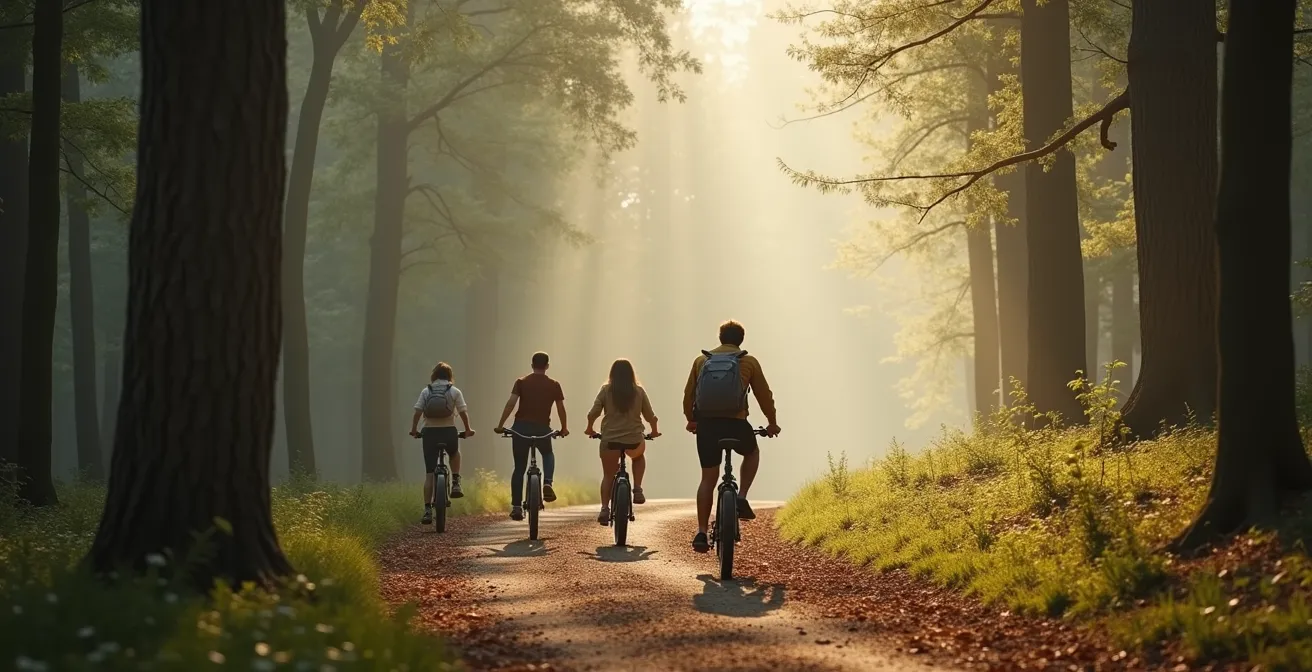
The science is clear: physical activity increases blood flow, delivering more oxygen and nutrients to your brain and muscles. It also triggers the release of endorphins, the body’s natural mood elevators, and neurotransmitters like dopamine and serotonin, which improve focus and vitality. An e-bike ride provides this benefit without the high barrier to entry of a strenuous workout. The electrical assist ensures the exercise remains in a low-impact, “energizing” zone rather than an exhausting one. In fact, research shows that just 150 minutes of weekly exercise—or about two 75-minute family rides—provides significant improvements in mental wellbeing.
Case Study: The Shift to Sustainable Wellness
Traditional gym memberships or exercise programs often face high dropout rates because they feel like a chore. E-bikes reframe the entire concept. They seamlessly integrate health benefits into daily life, whether through commuting or family outings. Studies have shown this approach leads to incredible health outcomes, including a potential 50% reduction in metabolic syndrome risk and major boosts in cardiovascular fitness and mental health, all because the activity is enjoyable and sustainable. It isn’t a “workout program”; it’s just a better way to live.
The next time you feel too tired to move, remember that a gentle e-bike ride is not an energy expense, but an energy investment that will pay you back with interest.
When to Ride for Better Sleep: Morning vs Evening Impact?
An active lifestyle is one of the pillars of good sleep, and e-biking is an excellent way to contribute to it. However, the *timing* of your ride can influence its effect on your sleep quality. The choice between a morning or evening ride depends on your personal goals and how your body responds to exercise, but there are some general scientific principles to guide your family’s schedule.
A morning ride is a powerful way to sync your body’s internal clock, or circadian rhythm. Exposure to natural morning light signals to your brain to suppress melatonin (the sleep hormone) and increase alertness. This makes you feel more awake and energized throughout the day and helps set a stronger “sleep pressure” signal for that evening. A brisk ride before work or school can lead to a more productive day and a deeper, more restorative sleep at night.
An evening ride, on the other hand, can be a wonderful way to de-stress and mentally unwind from the day. The primary concern with evening exercise has been its potential to raise core body temperature and heart rate, which could interfere with falling asleep. However, a gentle e-bike ride is typically not intense enough to cause this issue. For many, the slight rise in body temperature followed by a cool-down period a couple of hours before bed can actually promote sleepiness. It’s a great way to transition from the “on” mode of the day to a relaxed state, but it’s best to finish your ride at least 90 minutes before your intended bedtime to allow your body to fully wind down.
The Mistake of Letting Underage Kids Ride Class 3 E-Bikes
As e-bikes become a family staple, ensuring everyone’s safety is the top priority. One of the most critical—and often overlooked—aspects is understanding the different e-bike classes and their associated age and speed restrictions. A common and dangerous mistake is assuming all e-bikes are the same, leading parents to inadvertently let underage children ride models that are too powerful and fast for them.
E-biking as a family is an exciting way to spend time together outdoors. However, it’s important to note that most e-bikes… are recommended for riders 16 years and older.
– VTUVIA Electric Bike Team, The Best E-Bikes for Families Guide
E-bikes are generally categorized into three classes. Class 1 and Class 2 e-bikes have a maximum assisted speed of 20 mph. The key difference is that Class 2 bikes have a throttle, allowing movement without pedaling. Class 3 e-bikes, however, can reach an assisted speed of 28 mph, a significant jump in velocity that requires more skill, maturity, and road awareness to handle safely. Most states have laws stipulating that riders must be at least 16 years old to operate a Class 3 e-bike. The table below, based on common regulations, provides a clear overview.
| E-Bike Class | Max Assisted Speed | Throttle | Minimum Age |
|---|---|---|---|
| Class 1 | 20 mph | No | 14-16 (varies by state) |
| Class 2 | 20 mph | Yes | 14-16 (varies by state) |
| Class 3 | 28 mph | Optional | 16+ (most states) |
Always check your local state and city laws, as they can vary. Choosing the right class of e-bike for each family member is not just a legal requirement; it’s a fundamental act of responsible care that ensures every family adventure remains a safe one.
Why the “E-Bike Smile” Reduces Work Stress Levels by 30%?
There’s an undeniable phenomenon known among cyclists as the “e-bike smile”—that look of pure, unadulterated joy on someone’s face as they effortlessly glide up a hill or zip along a path. This isn’t just a fleeting feeling; it’s the visible result of powerful stress-reduction mechanisms at work. Replacing a stressful car commute or a sedentary evening with an e-bike ride can have a profound impact on mental health, going far beyond simple exercise.
First, riding an e-bike forces present-moment awareness. Unlike driving a car on a familiar route, which can often be done on autopilot while your mind worries about work or personal issues, cycling demands your attention. You are constantly scanning the path, listening for your surroundings, and feeling the wind. This acts as a form of natural meditation, providing a much-needed distraction from the cycle of negative thoughts and anxieties. The rhythmic nature of pedaling itself can be deeply meditative, calming the nervous system.
Second, it provides a sense of freedom and control that is often missing in a stressful work life. You are not stuck in traffic; you are moving under your own power, augmented by technology. This feeling of empowerment is a potent antidote to feelings of helplessness that often accompany high-stress environments. The preference is clear, with consumer survey data revealing that 75% of e-bike riders say they prefer riding their e-bike to driving their car. It transforms a daily chore into a daily delight, fundamentally reducing the baseline stress level of your day.
Key Takeaways
- E-bikes neutralize fitness differences, enabling families to ride together at a conversational pace.
- Replacing passive screen time with an active “micro-adventure” builds strong family bonds and healthy habits.
- Light e-bike exercise boosts energy and improves sleep, rather than draining your reserves.
From Occasional to Daily: How to Build a Cycling Habit That Sticks for 21 Days?
The first family e-bike ride is exciting, but the real magic happens when it transforms from a novelty into a cherished habit. The key to making this change stick is to be intentional and apply principles from habit formation science, famously outlined in frameworks like James Clear’s “Atomic Habits.” The goal is to make riding the easiest, most attractive option.
First, make it obvious. Don’t hide the bikes in the back of the garage. Keep them charged, accessible, and near the door. The visual cue serves as a constant, gentle reminder of the fun that awaits. Second, make it attractive. Plan rides that have a built-in reward. This could be a scenic route, a destination with great coffee, or simply the satisfaction of watching your mileage add up on a tracking app. When the experience itself is desirable, you won’t need willpower to do it. A recent study found that collectively, e-bike riders replaced 1,778 miles of car travel, not because they were forced to, but because the alternative was more enjoyable.
Third, make it easy. Reduce friction at all costs. Lay out helmets, gloves, and water bottles the night before. A 2-minute preparation barrier can be the difference between riding and staying home. Finally, make it satisfying. Celebrate your consistency. A simple wall calendar where you mark off every ride can be incredibly motivating. Each checkmark is a vote for your new identity: “We are a family that is active and enjoys the outdoors together.” This identity shift is the most powerful driver of long-term change.

By engineering your environment and your mindset, you move beyond relying on fleeting motivation and build a system where cycling becomes an automatic and joyful part of your family’s life.
Start today by planning your first micro-adventure. Evaluate your family’s routine, pick a fun destination, and transform your weekend from one of passive consumption to one of active connection.