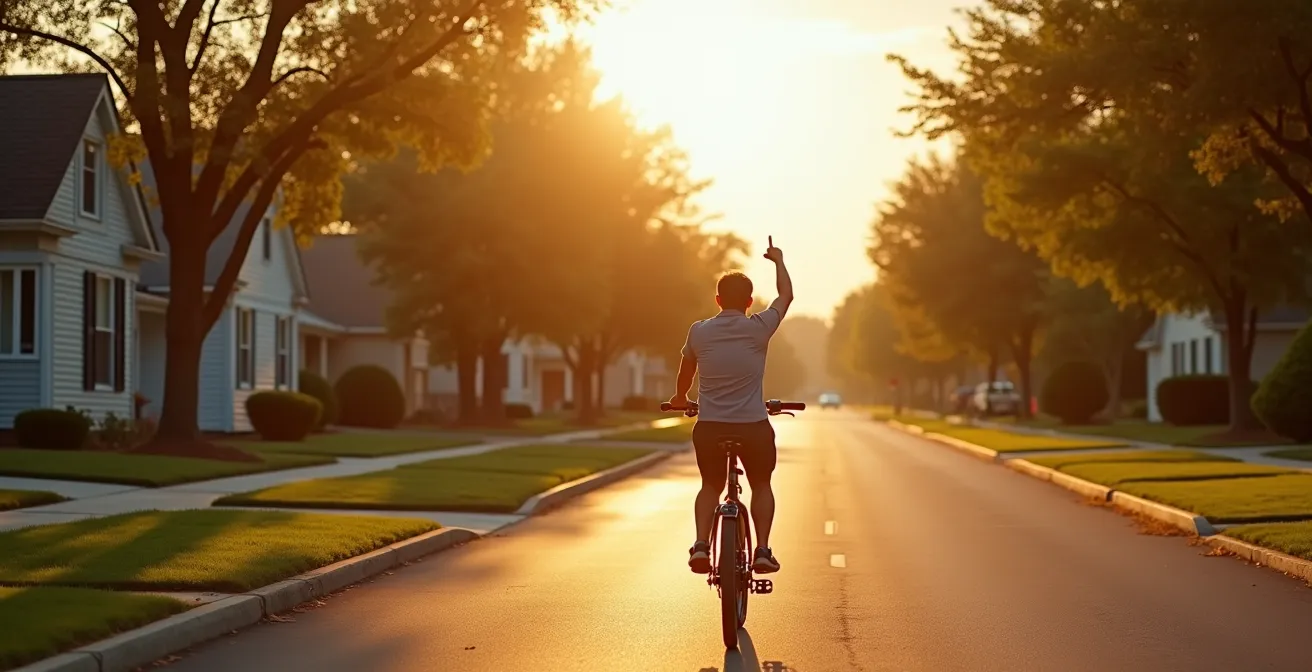
The core conflict between e-bike riders and their neighbors isn’t just about speed; it’s about the “perceptual gap” created by silent, swift movement that pedestrians don’t expect. This guide moves beyond simply “slowing down” to offer diplomatic strategies for managing your presence, communicating your intentions non-verbally, and rebuilding the unwritten social contract of shared suburban spaces for a more peaceful ride.
Riding an e-bike through a quiet suburban neighborhood can feel like a superpower. You glide effortlessly past manicured lawns, the wind in your hair, covering ground with a quiet efficiency that’s both exhilarating and practical. But then it happens: you round a corner and see a pedestrian jump, startled by your silent approach. You may have been riding at a perfectly reasonable speed, yet the reaction is one of alarm, sometimes followed by a disapproving glare. You’ve just fallen into the “perceptual gap”—the void between your actual speed and the speed others expect from a vehicle that looks and sounds like a traditional bicycle.
Common advice often revolves around simplistic solutions like ringing a bell or just “being nice.” While well-intentioned, this advice fails to address the root of the friction. The issue isn’t a lack of courtesy, but a breakdown in the unspoken social contract of shared spaces. E-bikes, with their unique combination of speed and silence, operate in a grey area that neither cars nor analog bikes occupy, leading to confusion, surprise, and frustration from pedestrians, drivers, and even Homeowners Associations (HOAs).
But what if the key wasn’t just following the letter of the law, but mastering the art of social negotiation on two wheels? This article reframes the challenge. It’s not about finding loopholes in regulations or winning arguments; it’s about proactively managing how you are perceived. We will explore the psychology behind why your speed is so startling, how to communicate with your community through data-driven diplomacy, and how to develop a riding style that announces your presence respectfully, turning potential conflict into peaceful coexistence.
This guide will walk you through the essential strategies for becoming a respected member of your neighborhood’s traffic ecosystem. From understanding the nuances of road positioning to the political risks of irresponsible riding, you’ll learn the diplomatic tactics needed to ensure your e-bike is seen as a community asset, not a menace.
Summary: A Rider’s Diplomatic Handbook for E-Bike Harmony
- Why the “Silent Speed” of E-Bikes Startles Pedestrians More Than Cars?
- How to Navigate HOA Bans on E-Bike Battery Storage in Condos?
- Sidewalk or Street: Where Should a 20mph E-Bike Be in a Neighborhood?
- The Mistake of Letting Underage Kids Ride Class 3 E-Bikes
- When to Form a Neighborhood Watch for High-Value Bike Security?
- How to Choose a Silent Motor for Peaceful Morning Commutes?
- The Risk of Riding High-Speed E-Bikes Without Registration Plates
- Surviving Rush Hour: Defensive Riding Tactics for New Urban Cyclists
Why the “Silent Speed” of E-Bikes Startles Pedestrians More Than Cars?
The fundamental reason e-bikes cause more surprise than cars is the mismatch between sensory input and kinetic reality—a phenomenon we can call the “perceptual gap.” Pedestrians have spent their entire lives subconsciously trained to associate speed with noise. A car engine provides an audible cue long before the vehicle is a threat. A traditional cyclist often makes sounds: the clicking of a freewheel, the sound of exertion, the whirl of a chain. An e-bike, particularly one with a quiet hub motor, can approach at 20 mph with almost no sound, violating these deep-seated expectations.
This isn’t just about being quiet; it’s about being unexpectedly fast for your visual and audible profile. Research from the Navy Postgraduate School into vehicle perception highlights that riders could have an accident if they accidentally engage the motor without intending to, such as when cornering on a wet road. This shows how the instant, silent torque is surprising even to the rider, let alone an unaware pedestrian. Your e-bike, a Class III model capable of 28 MPH, may look like a simple bicycle, but it closes distances at a rate that the human brain doesn’t anticipate from that shape.
The solution isn’t to be noisy, but to create a non-threatening “presence signature.” This means making yourself perceivable in a way that is gentle and predictable. It’s about adding subtle layers of sensory information that help close the perceptual gap. For instance, selecting tires with a slight tread pattern can create a soft road noise. High-quality hub motors often produce a gentle clicking sound when coasting. These are not annoyances; they are crucial, low-level audio cues that signal your approach far more diplomatically than a sudden, sharp bell ring.
Ultimately, your most powerful tool is proactive awareness. Making eye contact with pedestrians and drivers at intersections, using slow and steady movements, and choosing integrated lighting systems all contribute to a signature of predictability. You’re not just riding; you’re communicating non-verbally that you are in control and aware of your shared space.
How to Navigate HOA Bans on E-Bike Battery Storage in Condos?
When a Homeowners Association (HOA) board proposes a ban on e-bike battery storage, the discussion is rarely about the bike itself. It’s about fear, specifically the fear of lithium-ion battery fires, often fueled by dramatic news headlines. Approaching this conversation as a mediator, not an adversary, requires replacing fear with facts and demonstrating proactive responsibility. Your first step is to calmly acknowledge their safety concerns as legitimate, then gently reframe the risk with objective data.
It’s important to differentiate between certified, high-quality batteries and the uncertified or modified batteries often implicated in fire incidents. You can point out that the risk profile for a certified battery is extremely low. For example, some fire statistics show that about 1 in 15,000 e-bikes may experience a fire, a risk comparable to or lower than many other household lithium-ion devices. Presenting this information helps move the conversation from an emotional reaction to a logical risk assessment.
To make the risk even more tangible, a comparative approach is highly effective. You can present data that puts e-bike batteries in context with other devices the HOA implicitly allows, such as laptops or power tools.
This comparative table helps the board understand that they are singling out one device among many that use similar technology. It also highlights that the real danger lies with uncertified and modified batteries, not the compliant ones sold by reputable manufacturers.
| Device Type | Fire Risk Level | NYC 2024 Incidents | Safety Certification Required |
|---|---|---|---|
| E-bike Battery (UL Certified) | Low | 277 fires total, deaths fell from 18 to 6 after certification rules | UL 2849 |
| Laptop Battery | Very Low | Not tracked separately | UL 62368-1 |
| Power Tool Battery | Low | Not tracked separately | UL 62841-1 |
| Uncertified/Modified E-bike | High | 45% of fires involved conversions | None |
Finally, you must demonstrate personal responsibility. Propose a solution that directly addresses their fears. Offer to store your battery in a certified, fire-resistant LiPo storage bag and to only use the original, UL-certified charger. This shows you are not dismissing their concerns but are taking concrete, visible steps to mitigate an already low risk. This moves you from being part of the “problem” to being a model of responsible ownership.
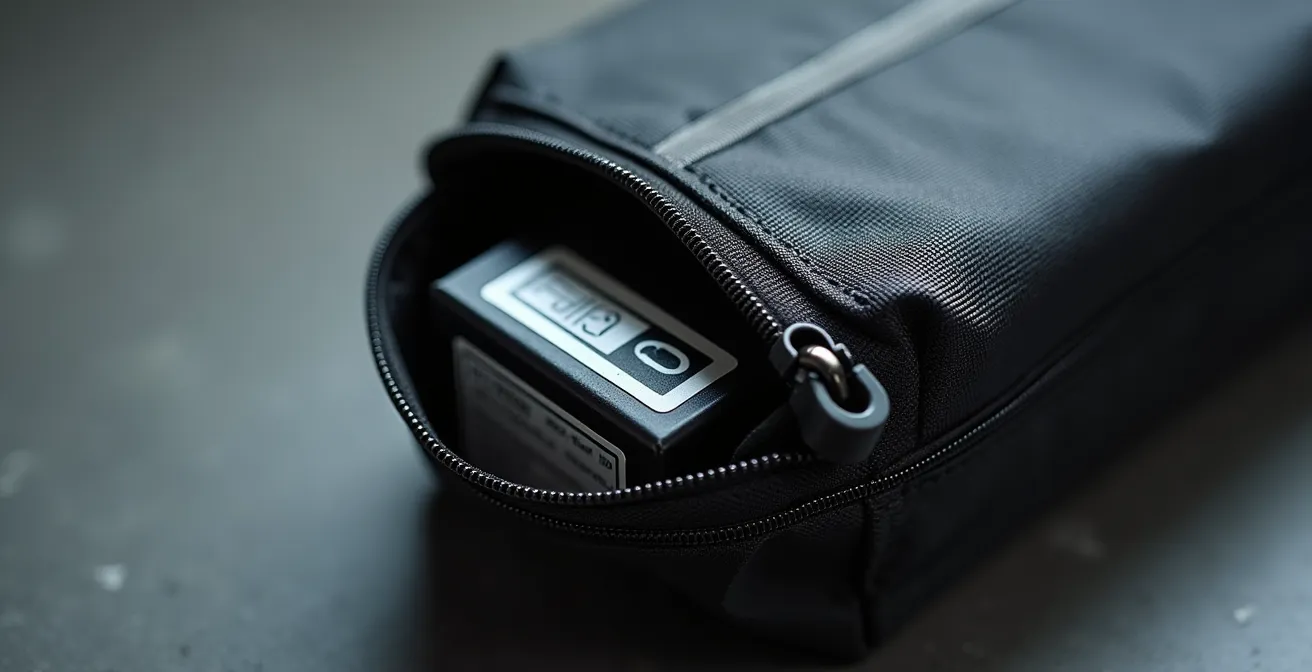
By combining data-driven diplomacy with proactive safety measures, you can transform the conversation from a prohibitive ban into a collaborative policy that ensures safety for everyone without penalizing responsible riders.
Sidewalk or Street: Where Should a 20mph E-Bike Be in a Neighborhood?
The question of “sidewalk or street” is one of the most common sources of friction for e-bike riders in suburbs, and the answer is rarely a simple binary. The law is often a confusing patchwork that changes from one county to the next. For instance, a case study of New York suburbs shows how Westchester County allows Class 1 and 2 e-bikes on multiuse paths but restricts Class 3 to roads only, while neighboring Nassau County has different rules. A legal ride in one town can become an illegal one just by crossing a municipal line.
Because the law is an unreliable guide, the best approach is to make decisions based on the principle of minimizing the “speed differential.” This means choosing the space where your speed is most closely aligned with the flow of other traffic. Riding a 20 mph e-bike on a sidewalk with regular pedestrian traffic creates a massive speed differential, making you a startling and dangerous obstacle. Conversely, riding that same bike on a suburban road where cars are traveling at 40 mph creates another dangerous differential, putting you at risk from behind.
The diplomatic rider’s goal is to find the “third space” — often a quiet residential street, a dedicated bike lane, or a wide, empty multiuse path. The key is a dynamic assessment of your environment. You should constantly be asking yourself: Where am I least likely to surprise someone or be surprised myself? A mental framework can help you make the right choice in seconds:
- Assess traffic flow: If cars consistently exceed 30-35 mph, the main street is likely not your safest option unless you can confidently take the lane.
- Check pedestrian density: If a sidewalk or path has more than a couple of people on it, your place is elsewhere. Your convenience does not override their safety and comfort.
- Know your class: Understand the legal limits of your e-bike. Class 1 is pedal-assist up to 20 mph, Class 2 has a throttle up to 20 mph, and Class 3 is pedal-assist up to 28 mph. Many paths prohibit throttle use and Class 3 bikes entirely.
- Identify optimal zones: Your best bet is often a quiet side street with a 25 mph speed limit, where your speed is on par with vehicular traffic.
When you must ride on a street with faster cars, positioning is key. Don’t hug the curb, as this invites dangerous passes. Instead, take the lane visibly, especially before intersections, to make your intentions clear and prevent drivers from attempting to squeeze by. This isn’t aggressive; it’s a clear, defensive, and predictable action that protects everyone.
The Mistake of Letting Underage Kids Ride Class 3 E-Bikes
One of the fastest ways to erode community goodwill and trigger restrictive regulations is to allow underage and untrained children to ride high-powered e-bikes. While it may seem like a fun, modern alternative to a traditional bike, putting a 12-year-old on a Class 3 e-bike capable of 28 mph is a recipe for disaster. The issue is a dangerous combination of a child’s still-developing cognitive abilities—such as risk assessment and impulse control—with a machine that has the speed and weight closer to a moped than a bicycle.
The statistics are alarming and provide a factual basis for community concern. In Marin County, a hotspot for youth e-bike usage, data revealed that children aged 10-15 are at a five times higher risk of serious e-bike injury than any other age group. These aren’t just scraped knees; these are significant accidents that have a ripple effect. This dramatic rise in youth injuries prompted a community-wide response, with the Superintendent of Schools, a public health officer, and the Police Chiefs’ Association issuing a joint letter to parents. This illustrates a critical point: individual parenting choices in this area have public consequences, inviting the very regulations that responsible adult riders wish to avoid.
The diplomatic approach for parents is to treat e-bike access as a privilege earned through progressive training, much like learning to drive a car. A child should first master a traditional bicycle, demonstrating proficiency in traffic laws, road awareness, and responsible handling. Only then should they be introduced to a low-powered, Class 1 e-bike under strict supervision.
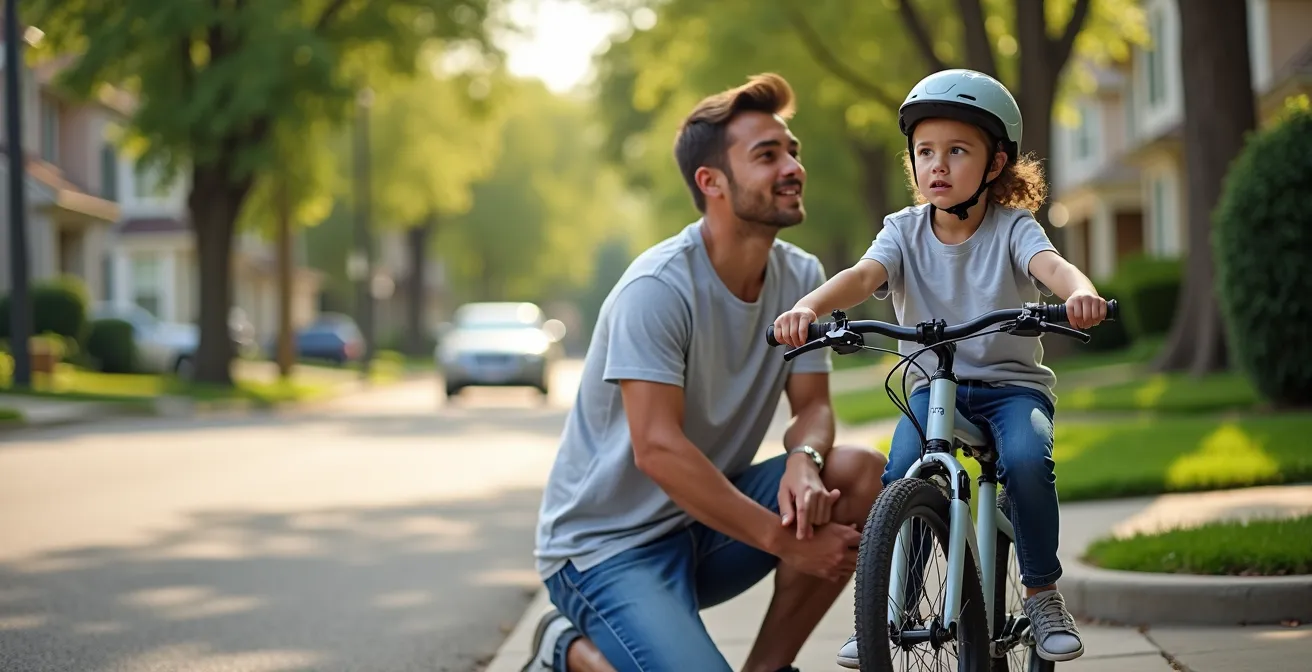
Letting an unprepared child ride a powerful e-bike breaks the unwritten social contract. It tells the community that you are prioritizing your child’s momentary fun over the collective safety of the neighborhood. This single act can generate more complaints and calls for bans than a hundred responsible adults. The most courteous thing you can do for your fellow riders is to ensure your own family members are ambassadors for safety, not catalysts for crackdowns.
When to Form a Neighborhood Watch for High-Value Bike Security?
The term “neighborhood watch” often conjures images of suspicion and curtain-twitching. For high-value e-bikes, a more effective and diplomatic approach is to reframe the concept from a “watch” program to a “community coalition” focused on proactive security and shared information. The time to form such a group is not after a string of thefts has already occurred, but as soon as a critical mass of e-bikes appears in the neighborhood. It’s about building a positive, collaborative network before a negative event forces a reactive response.
A powerful model for this comes from Manhattan Beach, where a grassroots initiative was more effective than any top-down program. There, two high school students, Alex Chun and Justin Newman, led an e-bike safety initiative by creating humorous PSA videos on TikTok and Instagram. Their “Ride Safe, Ride Ready” campaign demonstrates that community leadership can come from anyone and that a positive, engaging tone is far more powerful than a fearful one. This approach builds social fabric rather than sowing distrust.
Starting a community security coalition doesn’t have to be a formal or intimidating process. It can begin with a few simple, practical steps that create a network of support and a culture of collective security. The goal is to make your neighborhood a harder target by increasing communication and shared resources.
Here are some steps to build a modern, positive bike security network:
- Create a voluntary bike registry: Set up a shared, private document (like a Google Sheet) where neighbors can log their bike’s serial number, a photo, and distinguishing features. In the event of a theft, this information is immediately available for a police report.
- Organize group discounts: Work with a local bike shop to get a group discount on high-quality U-locks, GPS trackers, or other security devices. This incentivizes better security for everyone.
- Establish a real-time alert system: A simple neighborhood WhatsApp or Signal group can be used to send real-time alerts about suspicious activity, far faster than a traditional email chain.
- Host security clinics: Invite a local police officer or a bike security expert to a casual quarterly meeting to share the latest tips on locking techniques and theft prevention.
This collaborative approach shifts the dynamic from individual vulnerability to collective strength. It upholds the social contract by demonstrating that e-bike owners are not just concerned about their own property, but are actively working together to be responsible and secure members of the community.
How to Choose a Silent Motor for Peaceful Morning Commutes?
For the rider, a silent motor is a key component of a peaceful morning commute, allowing them to enjoy the sounds of nature without a distracting whine. However, as we’ve discussed, complete silence can be a problem for pedestrian awareness. The goal is not total silence, but “acoustic discretion”—a sound profile that is unobtrusive to the rider and the neighborhood, yet still provides a subtle cue of your presence. This balance is primarily determined by your motor type and drivetrain maintenance.
E-bike motors fall into a few main categories, each with a distinct sound character. Choosing the right one is your first step toward acoustic diplomacy.
| Motor Type | Noise Level | Sound Character | Best For |
|---|---|---|---|
| Mid-Drive (Quality) | Very Low | Low hum | Suburban commuting |
| Direct-Drive Hub | Low | Gentle whir | Quiet neighborhoods |
| Geared Hub (Budget) | Moderate-High | High-pitched whine | Not recommended for early mornings |
| Sine-Wave Controller | Lowest | Nearly silent | Stealth commuting |
As the table shows, a high-quality mid-drive or direct-drive hub motor offers the best balance. They are quiet enough to be pleasant but not so silent as to be completely invisible. A bike equipped with a sine-wave controller will be the quietest, but this requires the rider to be even more vigilant about using other cues—like lights and predictable positioning—to create their “presence signature.” Budget geared hubs are often the loudest and should be avoided if early morning peace is a priority.
However, the motor is only part of the equation. A silent motor can be completely undermined by a noisy drivetrain. Rattles, squeaks, and grinding chains are not just mechanically inefficient; they are socially abrasive. A well-maintained bike sounds professional and cared-for, signaling a responsible rider. A regular drivetrain audit is a non-negotiable part of e-bike courtesy.
Your Checklist for a Silent Drivetrain Audit
- Tire Pressure and Spokes: Before riding, check the tire PSI with a gauge. An underinflated tire is noisy and inefficient. Squeeze your spokes to check for looseness and tighten any broken or loose ones with a spoke wrench to eliminate clicking.
- Chain Lubrication: Apply a quality chain lubricant at least once a week, making sure to wipe off any excess. A dry chain is a primary source of noise, while excess lube attracts dirt that creates grinding sounds.
- Brake Alignment: Ensure your disc brake calipers are perfectly aligned. A rubbing brake pad creates a constant, irritating squeal or scraping sound that is highly noticeable in a quiet environment.
- Accessory Security: Check all bolts on fenders, racks, and water bottle cages. Use rubber washers when mounting these accessories to dampen vibrations and prevent rattling on bumpy roads.
- Tire Selection: When it’s time to replace your tires, choose a model with a minimal tread pattern. Slick or semi-slick tires roll much more quietly on pavement than knobby off-road tires.
The Risk of Riding High-Speed E-Bikes Without Registration Plates
Riding a high-speed e-bike that legally qualifies as a motor vehicle without the proper registration and licensing is one of the most damaging things a person can do to the e-biking community. It’s not just a personal legal risk; it’s a political act that provides powerful ammunition to those who want to impose stricter regulations on all riders. Every time an unregistered, overpowered e-bike is ridden irresponsibly, it reinforces the public perception of e-bikes as lawless menaces.
The legal lines are often clearer than many riders assume. In many jurisdictions, the 750-watt motor output is a critical threshold. For example, according to California motor vehicle regulations, electric bicycles with motors of more than 750 watts are not considered “e-bikes” but are classified as motor-driven cycles. This classification requires the vehicle to be registered with the DMV, have a license plate, and for the rider to hold a Class M license and carry insurance. Ignoring these requirements is not a grey area; it is operating an unregistered motor vehicle.
The consequences of this behavior extend far beyond a potential ticket. A single, highly public incident can shape policy and public opinion for years. A stark example of this occurred when a journalist was conducting a live TV report. In the background, an e-bike rider zoomed down a pedestrian promenade and popped a wheelie right next to him. The journalist, John Palminteri, immediately went on air and declared the behavior “completely UNACCEPTABLE.” This one irresponsible act, broadcast to thousands, created a vivid, negative image that is far more memorable than data about accident rates. It hands opponents of e-bikes a perfect, emotionally charged soundbite to use in city council meetings.
This is the political risk: when a fraction of riders act as if the rules don’t apply to them, they invite regulators to create new rules that apply to everyone. They break the fragile social contract that allows e-bikes to operate with relative freedom. As a diplomatic rider, the most powerful statement you can make is to ensure your own bike is fully compliant with the law. If your bike is over 750w, get it registered. If it’s not, ride in a way that clearly distinguishes you from those who flout the law. Your compliance is a vote in favor of continued riding freedom for the entire community.
Key takeaways
- The core of e-bike friction is the “perceptual gap” between silent speed and pedestrian expectations.
- Diplomatic riding is about managing perceptions through a predictable “presence signature,” not just following rules.
- Data and proactive safety measures are more effective in HOA discussions than emotional arguments.
- Irresponsible behavior, such as underage riding on powerful bikes or using unregistered models, creates political backlash that affects all riders.
Surviving Rush Hour: Defensive Riding Tactics for New Urban Cyclists
While the title may suggest a downtown metropolis, suburbs have their own intense “rush hours” that require a unique set of defensive tactics. These periods, typically centered around school drop-off and pick-up times (e.g., 8:15-8:45 AM and 3:00-3:30 PM), create a perfect storm of distracted drivers, unpredictable child pedestrians, and a general sense of urgency. Surviving this environment requires a heightened state of awareness and a commitment to a mindset of “kinetic empathy”—the ability to anticipate the actions and limitations of others.
Your primary strategy is to be hyper-vigilant and assume invisibility. In these chaotic moments, a driver rushing to get their child to school is not looking for a 25 mph cyclist. You must scan constantly for threats that are unique to the suburban landscape. This includes watching for reverse lights in driveways, opening garage doors, and cars pulling out from behind large SUVs or minivans. Always stop at stop signs and red lights and follow posted speed limits; this is not the time to push the limits of your e-bike.
Data from urban centers on accidents can be instructive. While the context is different, FDNY data from NYC shows that a high number of incidents occur during peak commute hours. The principle is universal: when traffic density and stress levels increase, so does risk. In suburbs, this risk is amplified by the design of the streets themselves. Wide intersections, for example, are prime locations for “right hook” accidents, where a car turns right directly in front of or into a cyclist. To prevent this, you must take the full lane at least 50 feet before the intersection, making yourself impossible to ignore.
Finally, you must respect the physics of your own vehicle. An e-bike is heavier and faster than a traditional bicycle, meaning it requires a greater stopping distance. At 25 mph on a suburban street, you need to maintain an extra buffer zone, especially if roads are wet or covered in leaves. This extra space gives you time to react to the unexpected—a child running into the street, a car pulling out without looking—which is the defining characteristic of the suburban rush hour. Your survival depends not on your speed, but on your ability to anticipate and react defensively.
Your next ride is an opportunity to practice this diplomacy. By consciously managing your presence, communicating clearly through your actions, and riding with empathy, you do more than just get from point A to B—you actively build a better, more peaceful relationship between the e-biking community and the neighborhood you share.