
In summary:
- Treat your e-bike as your primary daily vehicle and car-share as a specialized tool for specific jobs, not a 1-to-1 car replacement.
- Calculate your personal breakeven point; for most city dwellers, accessing vehicles via apps is far cheaper than owning one.
- Build a “logistical safety net” with multiple apps and backup plans to eliminate “just in case” car ownership anxiety.
- Use data (volume, weight, distance) to make rational, stress-free decisions between riding your bike and booking a car.
In the dense heart of the city, your car can feel less like freedom and more like a financial ball and chain. The monthly payments, the hunt for parking, the insurance bills, the unexpected repairs—it all adds up to a constant, low-grade stress. You’ve heard the advice: “Just sell your car and bike more!” It’s a well-meaning but simplistic take that ignores the messy realities of life. What about torrential rain? What about that perfect secondhand couch you found online? What about a big grocery run?
The common approach to going car-free often fails because it tries to find a single replacement for a car. But what if that’s the wrong way to think about it? The secret to a truly liberated, asset-light lifestyle isn’t about replacement; it’s about intelligent design. It’s about curating a personal logistical ecosystem where you own the assets that provide daily joy and freedom (like an e-bike) and simply access the heavy-duty tools when you need them.
This is your playbook for that system. We’re moving beyond the philosophical benefits and diving into the tactical choreography of modern urban mobility. Forget the idea of a car-share service being your “other car.” Instead, think of it as a portfolio of specialized consultants you call upon for specific jobs. This guide will show you exactly how to orchestrate these tools to handle every real-world scenario, from moving furniture to planning holiday travel, empowering you to own nothing but access everything.
This article provides a complete tactical breakdown for building your asset-light lifestyle. Explore the specific strategies for each common challenge you’ll face when transitioning away from car ownership.
Summary: The Asset-Light Life: How to Own Nothing but Access Everything with E-Bikes and Car Share
- Why Zipcar + Cargo Bike Is the Ultimate Furniture Moving Combo?
- How to Use Car Share as Your “Rain Insurance” Policy?
- Zipcar Membership vs Car Payments: Analyzing the Breakeven Point
- The Mistake of Relying on Car Share During Holiday Weekends
- When to Ride vs When to Drive: The Volume Threshold for Groceries?
- The Error of Owning a Car for “Just in Case” Trips Once a Month
- How to Replace Your Second Car With an E-Bike in 3 Months Without Regret?
- The 2-Ton Diet: How Replacing Short Car Trips Cuts Your Annual Emissions by 1 Ton?
Why Zipcar + Cargo Bike Is the Ultimate Furniture Moving Combo?
The number one mental hurdle for ditching a car is the “big stuff” problem. How do you move a bookcase or haul a set of chairs? The answer lies in a two-part strategy that redefines heavy lifting. Your cargo e-bike is not just for groceries; it’s your primary fleet vehicle for the majority of moving tasks. It’s the agile workhorse for boxes, disassembled items, and smaller furniture that you can transport over several trips, avoiding the stress of a single, monumental moving day.
Major brands are already proving the incredible capacity of modern cargo bikes. For example, IKEA’s pilot program uses solar-powered cargo bikes that can handle a surprising workload. Their Sunrider bike is designed to accommodate roughly 90% of the entire IKEA product range and can carry a load of up to 150 kilograms. This demonstrates that a huge portion of what we consider “car-only” items can be managed with the right bike.
For the remaining 10%—the truly oversized or awkwardly shaped items—you deploy your specialist: a car-share van. By using your cargo bike for the bulk of the work, you dramatically reduce the time you need to rent a vehicle. Instead of a full-day rental, you might only need a Zipcar for a single, efficient one-hour trip. This asset-light choreography transforms a move from a costly, stressful event into a manageable, low-cost logistical task.
- Phase 1: Pre-move decluttering and transport. Use your cargo bike for multiple trips over several days to transport boxes, disassembled items, and smaller furniture pieces.
- Phase 2: Strategic car-share booking. Reserve a Zipcar van only for the few items that exceed your cargo bike’s 150kg capacity or have irregular dimensions that make them unsafe to carry.
- Phase 3: Final optimization. Combine all large items into that single Zipcar rental, minimizing the rental duration and overall cost.
This dual approach doesn’t just save you money on rental fees; it reframes the entire process. It encourages a more mindful approach to moving, prioritizing decluttering and planning over brute force, which is the very essence of a minimalist, asset-light lifestyle.
How to Use Car Share as Your “Rain Insurance” Policy?
A sudden downpour is often cited as the Achilles’ heel of a bike-centric lifestyle. But with the right mindset, rain isn’t a disaster; it’s a predictable contingency you can plan for. Instead of seeing car-sharing as a daily transport option, reframe it as your “rain insurance” policy—a tool you deploy strategically when the weather turns against you. The key is to be proactive, not reactive.
This paragraph introduces the concept of planning for bad weather. To truly appreciate this strategic mindset, it’s helpful to visualize the scenario. The image below captures the moment of decision, where planning meets the reality of an urban downpour.
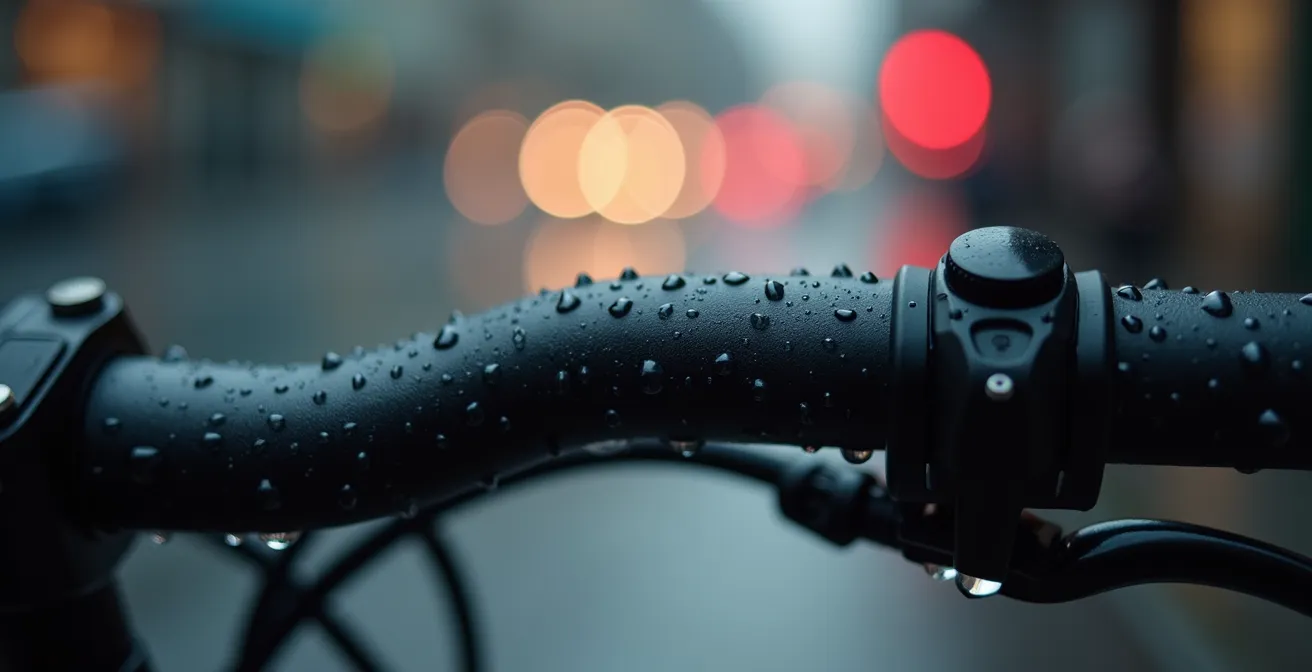
As you can see, the choice isn’t between getting soaked or giving up. It’s about having a system. On days with a high chance of rain, you check your car-share app in the morning. If you have an important meeting or can’t afford to arrive drenched, you book a vehicle in advance. This guarantees availability and protects you from the surge pricing common with ride-hailing apps during bad weather. The cost of a one-hour Zipcar rental becomes a small, predictable insurance premium for staying dry and on schedule.
This approach is not only more reliable but also more cost-effective than relying on last-minute solutions. A pre-booked car-share is almost always cheaper than a surge-priced Uber or Lyft, as this comparative analysis shows.
| Option | Average Cost (10-mile trip) | Booking Time | Availability in Rain |
|---|---|---|---|
| Uber/Lyft (one-way) | $25-40 | 2-5 minutes | Limited (surge pricing) |
| Zipcar (1-hour minimum) | $12-15 | Pre-book 24hrs ahead | Guaranteed if reserved |
| E-bike + rain gear | $0 (after gear purchase) | Immediate | Always available |
Ultimately, this strategy is about control. You’re no longer a victim of the weather forecast. You’re a logistician who has already accounted for it, turning a potential day of misery into a seamless, planned-for adjustment in your mobility portfolio.
Zipcar Membership vs Car Payments: Analyzing the Breakeven Point
The most compelling argument for an asset-light lifestyle is often the staggering financial savings. To truly understand the scale of this benefit, you need to look beyond the monthly car payment and consider the total cost of ownership: insurance, gas, maintenance, parking, and depreciation. When you add it all up, the financial logic of switching to an access-based model becomes undeniable. The question is no longer *if* you’ll save money, but *how much*.
The breakeven point is the frequency of use at which owning a car becomes cheaper than using car-share services. For most urban millennials who don’t have a daily car commute, that point is surprisingly high. In fact, you would need to use a car almost daily for ownership to make financial sense. According to Zipcar’s 2024 Impact Report, their members see an average savings of $1,173 per month compared to car owners. This isn’t a small lifestyle tweak; it’s a massive financial lever.
Even older data highlights this gap. In 2017, AAA estimated owning a new vehicle cost around $706 per month. In contrast, Zipcar members spent, on average, just over $100 per month. The key factor, especially in dense cities, is the hidden cost of parking. A monthly parking spot in cities like Seattle or Boston can easily cost between $250 and $500. Car-share services like Zipcar’s Commute plan bundle a reserved parking spot into the service, making the value proposition even more attractive for those who occasionally need a car for work.
This isn’t about giving up access to a vehicle. It’s about shifting from the high fixed costs of ownership to the low, variable costs of access. You’re paying only for what you use, liberating a significant portion of your income for other goals, whether that’s travel, investing, or simply living with less financial pressure.
By running your own numbers—tracking your current car expenses versus your projected car-share and e-bike costs—you transform an abstract concept into a concrete financial strategy. This data-driven approach removes the emotion from the decision and reveals the powerful economic truth of the asset-light life.
The Mistake of Relying on Car Share During Holiday Weekends
One of the biggest tactical errors a new car-free convert can make is assuming a car-share vehicle will be readily available during peak demand, especially on holiday weekends. On a Tuesday afternoon, a Zipcar might be just around the corner. On the Friday of a long weekend, the entire city’s fleet can vanish. This scarcity is a predictable failure point, and relying on last-minute availability is a recipe for frustration and disappointment.
The Pre-Holiday Scarcity Problem
The principle of supply and demand works against you during holidays. Everyone has the same idea: rent a car to get out of town. This creates a surge that car-share fleets, designed for typical urban usage patterns, simply cannot meet. This doesn’t mean the system is broken; it means you need to treat holiday travel as a distinct logistical challenge that requires a different set of tools and a much longer planning horizon. Your everyday car-share app is the wrong tool for this specific job.
Instead of relying on luck, a successful asset-light traveler builds a hierarchy of alternatives and plans months, not days, in advance. This proactive approach ensures you have mobility without the stress of competing for a limited pool of vehicles.
Your Holiday Travel Playbook: A Hierarchy of Alternatives
- Book Inter-City Transport Early: Reserve trains or buses 2-3 months in advance for the best prices and availability on major travel routes.
- Leverage Peer-to-Peer Rentals: If you need a car at your destination, book from services like Turo or Getaround at least 3 weeks before the holiday.
- Coordinate with Your Network: Make ride-sharing with friends or family an explicit part of your holiday planning.
- Use a “Reverse Commute” Strategy: If you must rent a car, book a vehicle in a residential area or a suburb rather than a city center, where demand is highest.
- Shift Your Timeline: The simplest hack is often the most effective. Plan to leave a day earlier (e.g., Thursday instead of Friday) to completely avoid peak demand.
By treating holiday travel as a special case that requires advanced planning, you maintain your freedom and flexibility without falling into the common trap of peak-demand scarcity. It’s another example of smart design triumphing over brute-force ownership.
When to Ride vs When to Drive: The Volume Threshold for Groceries?
The weekly grocery run is a perfect microcosm of the asset-light decision-making process. The default car-owner mindset is to drive, regardless of the shopping list. The asset-light mindset is to ask: what is the right tool for this specific job? The answer is often the e-bike, but the decision can be made rational and stress-free by establishing a clear “volume threshold.” It’s a simple system for deciding when to ride and when to book a car.
The decision isn’t just about total weight; it’s about density and bulk. A cargo bike can handle a surprising amount, but it excels with items that are either dense and small or bulky but light. A massive pack of paper towels is easy on a bike; two 12-packs of sparkling water are a different challenge. The key is to break the habit of the single, massive weekly “stock up” and embrace a more frequent, smaller-trip model. Two or three quick bike trips to the store per week are often faster and more pleasant than one big car trip, especially when you factor in parking.
This decision matrix helps visualize the thresholds. It’s not a strict rulebook but a guide to help you build intuition. You quickly learn what a “two-pannier” load feels like and can plan accordingly. For those rare “monthly warehouse run” occasions, you schedule a one-hour car-share rental, a planned and efficient use of a specialized tool.
This matrix helps you make a quick, logical choice between your e-bike and a car-share for any given shopping trip.
| Item Type | Examples | Best Transport Mode | Threshold |
|---|---|---|---|
| Bulky but Light | Paper towels, cereal boxes, chips | Cargo bike with front rack | Up to 60L volume |
| Dense and Heavy | Canned goods, cat litter, liquids | Car share | Above 15kg weight |
| Mixed Load | Weekly family shopping | 2-3 cargo bike trips/week | 20L per pannier capacity |
| Bulk Shopping | Monthly warehouse run | Zipcar van | Above 3 panniers equivalent |
Over time, this data-driven approach becomes second nature, but it also reveals a deeper truth about the lifestyle, as captured by e-bike enthusiast Kevin Driscoll in an interview:
It’s genuinely more fun to ride the e-bike to do something than to ride in the car
– Kevin Driscoll, C-VILLE Weekly Interview
By replacing the single-solution mindset of car ownership with this flexible, tool-based approach, you not only optimize for efficiency and cost but also rediscover the simple joy in everyday errands.
The Error of Owning a Car for “Just in Case” Trips Once a Month
Perhaps the most persistent psychological barrier to going car-free is the “what if?” factor. “What if I have an emergency?” “What if I get a last-minute invitation?” “What if I just *need* a car?” This anxiety leads to the single most financially irrational decision in urban mobility: owning a 2-ton, multi-thousand-dollar machine for a “just in case” scenario that happens once a month, or even less. This is the ultimate failure of the ownership model—paying 100% of the costs for 1% of the utility.
The fear is understandable, but it’s based on an outdated assumption that ownership is the only path to reliability. In today’s connected world, the opposite is true. A single personal car is a single point of failure. It can have a flat tire, a dead battery, or be blocked in. A true logistical safety net is not a single asset but a redundant, multi-layered system of on-demand services. You don’t need to own a car; you need to build a robust network of access.
Building this safety net is a proactive process. It’s about doing the prep work *before* you need it, so that when an unexpected situation arises, your response is calm and systematic, not panicked. It involves setting up multiple accounts, knowing your local options, and having clear protocols for different types of urgent needs. This preparation is what truly replaces the perceived security of a car sitting in a garage.
- Set up multiple platforms: Have payment methods authorized on at least two different car-share apps (e.g., Zipcar, Getaround) and two ride-hailing apps (e.g., Uber, Lyft) to protect against app-specific glitches or lack of availability.
- Identify your analog backup: Know the location and phone number of the nearest 24/7 traditional rental car agency. They are an excellent fallback for multi-day, last-minute needs.
- Establish a buddy system: Have a reciprocal agreement with a car-owning friend for true, rare emergencies. You can repay them with a nice dinner, cash, or by helping them with a task they dislike.
- Map your emergency routes: Pre-emptively map out the fastest public transit routes to key destinations like the nearest hospital or the airport. Knowing the way removes decision fatigue in a stressful moment.
By investing a few hours in building this system, you don’t just eliminate the need for a “just in case” car; you create a level of logistical resilience that car ownership alone can never provide. You replace a costly, depreciating asset with a smart, flexible, and far more robust system.
How to Replace Your Second Car With an E-Bike in 3 Months Without Regret?
For many households, the second car is the perfect candidate for elimination. It’s often the “errand car” or the backup commuter, and its usage patterns are ripe for replacement by an e-bike and car-share combo. The transition can feel daunting, but it doesn’t have to be an all-or-nothing leap of faith. A structured, three-month phase-out allows you to test the waters, build new habits, and sell the car with confidence, not regret. This methodical approach ensures the financial benefits are realized without disrupting your life.
The potential savings are a powerful motivator. Analysis shows that replacing some car trips with an e-bike can save over $2,000 per year, and if a household eliminates a motor vehicle entirely, that number can skyrocket to nearly $10,000 per year. The three-month framework is designed to help you capture those savings systematically.
- Month 1: Data Gathering (Keep the Car). Buy the e-bike but keep the second car. For one month, use the e-bike as your default for every trip it could plausibly handle. Use a simple app or notebook to track every trip you *still* took the car for and why. Was it rain? Cargo? Distance? This data is your roadmap.
- Month 2: System Building (Simulate the Sale). Put the car keys in a drawer. Looking at your data from Month 1, actively solve for each of those car trips using your new logistical ecosystem. If it was a rain day, practice booking a Zipcar in advance. If it was a cargo issue, do a test run with your bike’s panniers. This is your dress rehearsal.
- Month 3: Optimization and Sale (Go Live). After a month of successfully simulating car-free life, you’re ready. Sell the car. With the proceeds, you can upgrade your biking gear (hello, waterproof panniers!) or invest the difference. Use this month to refine your system, discovering the best routes and building confidence with every successful car-free trip.
This phased approach transforms a scary decision into a manageable, data-driven project. It replaces anxiety with empowerment and proves the viability of the new system before you make the final commitment.
You’re not just getting rid of a car; you’re executing a planned upgrade to a more efficient, affordable, and enjoyable transportation system. You’ll not only have a fatter bank account but also a newfound sense of freedom and accomplishment.
Key takeaways
- Build a System, Not a Replacement: Your e-bike is your daily driver. Car-share, ride-hailing, and public transit are specialized tools for specific jobs. Combine them into a resilient logistical ecosystem.
- Plan for Failure Points: Don’t expect a car to be available on a holiday weekend or in a downpour. Proactively book alternatives (trains, peer-to-peer rentals) for predictable high-demand situations.
- Know Your Numbers: Make decisions based on data, not habit. Understand your financial breakeven point and your personal grocery volume threshold to choose the right tool for the job without stress.
The 2-Ton Diet: How Replacing Short Car Trips Cuts Your Annual Emissions by 1 Ton?
While the financial and lifestyle benefits of going asset-light are immediate and personal, the collective impact is profound. Embracing this model is like putting your city on a “2-Ton Diet”—a tangible way to shed the environmental weight of unnecessary car dependency. Many of the trips we take by car are short, inefficient, and perfectly suited for an e-bike. By consciously replacing these short trips, you make a significant dent in your personal carbon footprint.
The numbers are surprisingly large. A typical passenger vehicle emits about 4.6 metric tons of carbon dioxide per year. The cold starts and stop-and-go traffic of short urban trips are particularly inefficient. Shifting these journeys to an e-bike has a direct and measurable effect. According to the 2024 North American Transportation Survey by Zipcar, active car-sharers contribute to a significant environmental impact, with an average reduction of 1,600 pounds of CO2 per person annually. That’s nearly one ton of emissions erased from the atmosphere each year, just by making smarter mobility choices.
But the impact extends beyond individual emissions. It reshapes the very fabric of our cities. As Zipcar’s leadership has noted, a single shared car can take many privately owned cars off the road, freeing up immense amounts of space.
Each Zipcar serves 50-80 members, which results in fewer cars, less parking, and more land for people, housing, and open space
– Tracey Zhen, Zipcar Impact Report
This is the ultimate promise of the asset-light life. It’s not just about personal freedom; it’s about contributing to cities that are quieter, greener, and more human-centric. By shedding the weight of car ownership, you help put your entire community on a path to a healthier future.
Your path to an asset-light life isn’t about sacrifice; it’s about smart design. Start today by mapping your “just in case” trips and see how many a specialized tool could solve, instead of a full-time, 2-ton machine sitting idle.